

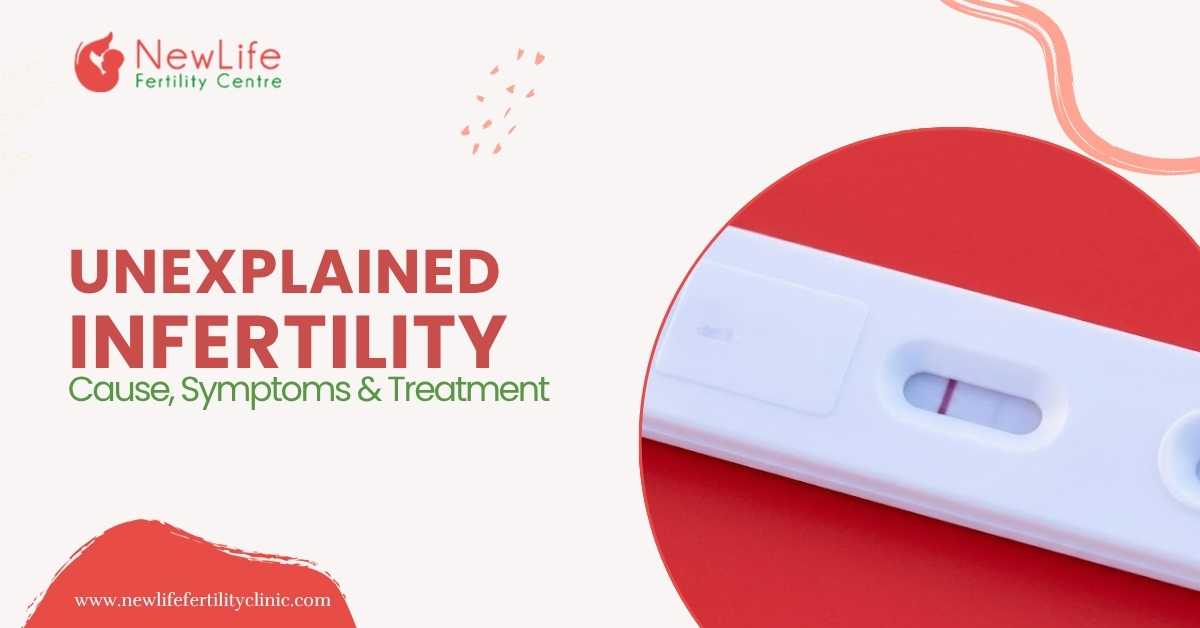


A highly confusing and tough thing for many couples is learning that their infertility problems have no obvious cause. Medical experts refer to this condition as unexplained infertility, which, in simple terms, is infertility with no definitive cause. The best ivf centre in Siliguri or any other place might help you with this problem.
A diagnosis of this condition indicates that routine reproductive tests have failed to pinpoint a particular cause of the infertility. There may still be a role for subtle reproductive characteristics that are not reliably detected in standard testing.
Overview of Unexplained Infertility
Simply put, when a couple cannot conceive despite regular, unprotected sexual activity and routine reproductive tests that do not identify a cause, they are diagnosed with unexplained infertility.
A medical examination usually verifies that ovulation is taking place, the fallopian tubes are open, there are no notable anomalies in the uterus, and the parameters of the semen are within normal limits. A fertility specialist may diagnose unexplained infertility if these results do not explain the problem of conceiving.
After a year of attempting to conceive, infertility is typically assessed under medical supervision. After six months, women over 35 should get evaluated, and those over 40 might benefit from seeing a specialist without delay. When reproductive health issues or known risk factors are present, an earlier examination is appropriate.
What Are the Possible Unexplained Infertility Causes?
By definition, the precise reason is still unknown. Even in cases where conventional test findings are normal, a number of subtle reproductive factors may be involved.
Egg quality: The ability of an egg to fertilize and develop into a healthy embryo cannot be entirely detected by standard testing; in general, egg quality deteriorates with age.
Sperm function: Not all aspects of sperm function, including all fertilization processes, are evaluated in a typical semen study.
Subtle ovulatory factors: Though ovulation may happen on a regular basis, conception may struggle due to other characteristics of egg development or reproductive hormone activity.
Fallopian tube function: Successful egg pickup, sperm transit, and fertilization are not guaranteed by open tubes.
Endometriosis: Even in cases when symptoms are minimal or non-existent, mild or undetected endometriosis may have an impact on fertility.
Egg-sperm contact and embryo development: The intricate biological processes involved in fertilization, early embryo development, and implantation are beyond the scope of standard fertility tests.
Uterine or endometrial factors: During a preliminary examination, certain anomalies impacting the uterine lining might not be found.
Fertility may also suffer due to general health and lifestyle. These include smoking, binge drinking, serious weight-related issues, and other medical problems that can put reproductive health at risk. However, infertility that cannot be explained should not always be attributed to these reasons.

What Are the Symptoms of Unexplained Infertility?
Unexplained infertility often lacks particular physical symptoms. Many couples have adequate sexual performance, regular menstrual cycles, and no obvious symptoms of reproductive issues.
The classic symptom of infertility is inability to conceive despite consistent, unprotected sexual activity during the advised time frame. Some people may have painful menstruation, pelvic pain, or irregular periods.
These symptoms might point to an underlying illness that needs more tests because they are not unique to infertility and cannot be explained.
How is unexplained infertility diagnosed?
Evaluating both partners and ruling out common, recognizable reasons for infertility are steps in the diagnosis process. Health examinations could involve the following, based on the medical history:
- Medical history and examination: Menstrual patterns, past pregnancies, length of time spent trying to conceive, medications, sexual health, medical issues, and lifestyle factors are all reviewed by an infertility specialist during the medical history and examination.
- Ovulation evaluation: Menstrual history, timely progesterone testing, or other tests may be used to determine whether ovulation takes place.
- Ovarian reserve assessment: Antral follicle count on ultrasound and anti-Müllerian hormone (AMH) are two key blood tests that help determine the expected response to ovarian stimulation.
- Semen analysis: This assesses the concentration, motility, and morphology of sperm, assisting in the identification of typical male-factor issues.
- Fallopian tube assessment: To detect if the fallopian tubes are open, doctors may use hysterosalpingography (HSG) or a suitable substitute.
- Uterine assessment: Structural anomalies that may impact pregnancy can be found with the use of ultrasound and, where necessary, further tests.
Know About the Treatment Options for Unexplained Infertility
Couples’ age, length of infertility, prior treatment, reproductive health, individual preferences, and cost matter when deciding on treatment.
Expectant Care & Natural Conception
Some couples may become pregnant naturally within a short period of time. A professional can advise trying for a predetermined amount of time, having sex every one to two days when the window is fertile.
You can support your preconception health by eating a balanced diet, exercising frequently, avoiding smoking and drinking, and taking folic acid prior to becoming pregnant. However, changing one's lifestyle won't ensure conception or solve every fertility issue.
Intrauterine Insemination (IUI) for Ovulation Stimulation
A fertility doctor near you may suggest intrauterine insemination after oral fertility medication to promote follicle development in some couples. Around ovulation, prepared sperm are inserted straight into the uterus during IUI.
This strategy may support the likelihood that an egg and sperm will unite. But because multiple pregnancies and other issues are likely, medical supervision is necessary for stimulated cycles.
In Vitro Fertilisation (IVF)
When first treatment fails, when time is crucial due to age or other considerations, or when IVF provides a better course of treatment, doctors may consider IVF.
IVF involves collecting eggs following ovarian stimulation and fertilizing them with sperm in a lab. After that, an embryo is placed inside the uterus/ womb very carefully. Plus, IVF offers information on fertilization and embryonic development that is not possible with standard fertility tests.
Counseling & Emotional Support
Infertility may interfere with relationships, mental health, and day-to-day living can all be impacted by infertility. Couples can manage uncertainty and make treatment decisions better with the support of counseling, support groups, and open communication.
Seeking emotional support is a wise choice for well-being.
When to See a Fertility Specialist?
If you have irregular periods, known reproductive disorders, prior pelvic infections, recurrent pregnancy loss, or other fertility concerns, you should think about getting a fertility consultation sooner.
Find out what tests have been done, whether more tests are necessary, what treatment is advised, and how success rates, risks, expenses, and options relate to your situation.
Final Words
Because standard tests do not yield a definitive explanation, infertility that cannot be explained can be stressful, too. The diagnosis does not, however, preclude successful reproductive treatments or natural conception. Make the best decision for your health with the most trusted fertility doctor at Newlife Fertility Centre.
FAQs
1. Is it possible to treat infertility that cannot be explained?
Based on the specific situation, treatment options may include IVF, ovarian stimulation with IUI, or expectant management.
2. If my infertility is unexplained, may I become pregnant naturally?
Though the likelihood depends on factors including age and the length of infertility, natural conception is possible.
3. Do symptoms arise from infertility that cannot be explained?
Generally, no. The primary sign is usually difficulty getting pregnant.
4. Is IVF always required?
Kindly seek guidance from a trusted healthcare expert, such as a fertility doctor or IVF specialist, before you consider IVF or any infertility treatment.
5. When should I consult a fertility specialist?
If you are under 35, seek evaluation after 12 months of trying; if you are 35 or older, seek evaluation after six months.
6. Does stress lead to infertility that cannot be explained?
Stress may have an impact on sexual health and well-being; it is not proven to be the only factor contributing to unexplained infertility.
