

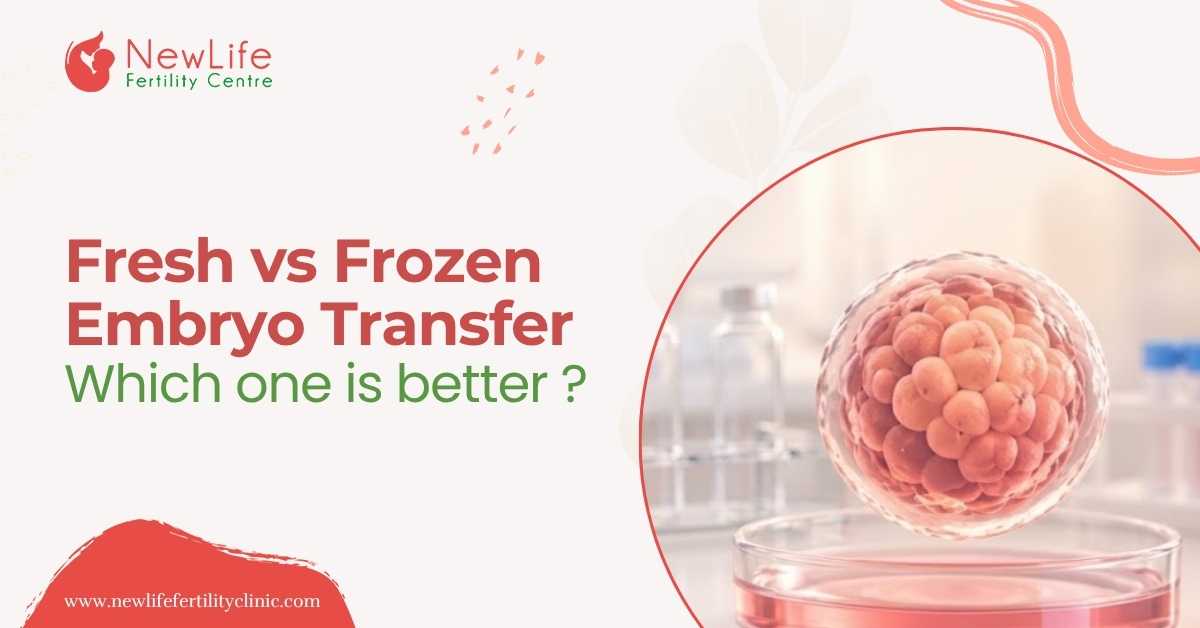


"Which embryo is best" isn't necessarily the most vital question when you reach the embryo transfer stage. People often get puzzled by two different approaches: fresh embryo transfer vs frozen embryo transfer.
Fresh embryo transfer is when an embryo is transplanted promptly after egg retrieval and fertilization. And frozen embryo transfer (FET) is when an embryo is cryopreserved and transferred in a later cycle. The best IVF centre in Siliguri like Newlife Fertility Centre can guide you in this regard.
A healthy pregnancy is possible with either strategy. Neither is "better" for all patients, which is what we have to understand. Age, ovarian response, embryo quality, hormone levels, uterine lining, whether genetic testing is planned, past IVF results, medical concerns, timing, and the fertility specialist's evaluation play a role in making the best decision.
A Fresh Embryo Transfer - Overview
Ovarian stimulation and egg retrieval occur during the same IVF cycle as a fresh embryo transfer. The resultant embryos are incubated for a few days, usually until they reach the blastocyst stage.
An expert places a chosen embryo into the uterus without first freezing it if the clinical team determines that the uterus is ready and there is no need to postpone transfer.
Ovarian stimulation, however, can momentarily change the body's reproductive environment and hormone levels. Delaying embryo transfer may enable the clinic to more carefully prepare the uterine environment for some women.
A Frozen Embryo Transfer - Overview
An embryo that has previously been cryopreserved is used in a frozen embryo transfer (FET). The embryo is frozen and then thawed for transfer rather than being transferred immediately following the IVF round.
The womb is prepared either through a natural or modified natural cycle, where suitable, or with prescribed medications such as estrogen and progesterone in a hormone-prepared cycle.
While survival is not assured, most embryos make it through the freeze-thaw process. According to available data, pregnancy results using frozen embryos may be similar to those obtained using fresh embryos.
FET offers greater flexibility, and this is its major benefit. When genetic testing is scheduled, the uterus needs more preparation, or a fresh transfer is not advised in the current cycle; for instance, embryos may be stored.
Fresh vs Frozen Embryo Transfer – Know the Key Differences
|
Factor |
Fresh Embryo Transfer |
Frozen Embryo Transfer |
|
Timing |
Same IVF cycle |
Later cycle |
|
Embryo |
Not frozen before transfer |
Previously cryopreserved |
|
Egg retrieval |
Right before transfer cycle |
Already done |
|
Uterine preparation |
Occurs during stimulation cycle |
Planned separately |
|
Genetic testing |
Might require freezing first |
Compatible with tested embryos |
|
Treatment flexibility |
Less flexibility |
More flexibility
|
|
Additional storage |
Not required before transfer |
Needs embryo storage |
|
Medication |
Depends on IVF protocol |
Based on natural or medicated FET |
Fresh vs Frozen Embryo Transfer success Rates - Is Fresh Embryo Transfer Less Successful Than Frozen Embryo Transfer?
Because some trials have shown benefits in specific patient categories, it is easy to conclude that frozen transfer must be successful or effective. The idea that frozen embryo transferincreases the live-birth rate for everyone is not supported by studies, though.
For example, there was no clear difference in the number of live births following the first transfer between frozen and fresh embryo transfers (48.7% versus 50.2%, respectively) in a large randomized trial enrolling women undergoing their first IVF cycle who ovulated properly.
Results can vary depending on patient factors, according to various studies. Fresh transfers had a greater live-birth rate than frozen transfers in several studies, according to a randomized trial comprising women who were thought to have a poor prognosis for IVF.
When Might a Frozen Embryo Transfer Be Considered?
Your IVF or fertility doctor may advise FET in several circumstances.
Genetic testing is scheduled.Transfer mostly happens after testing and embryo cryopreservation rather than right after, when embryos are subjected to some types of preimplantation genetic testing. This allows the testing procedure to be finished in the lab before an embryo is chosen for transfer.
The uterine environment requires additional time. The medical team may sometimes determine that it is better to transfer an embryo in a later round. The uterus can be prepared independently by separating ovarian stimulation from embryo transfer.
Ovarian hyperstimulation syndrome is a risk. Clinicians may decide to freeze embryos and delay your transfer if you are more likely to develop ovarian hyperstimulation syndrome (OHSS).
ASRM points out that the possible advantages of PGT-A vary depending on the specific clinical circumstances; it should not be automatically deemed necessary for every IVF patient.
Hormonal or endometrial factors. The fertility specialist may occasionally conclude that delaying transfer is a preferable way to manage the uterine environment.
More control over timing. Treatment can be scheduled according to the patient's schedule, medical conditions, or menstrual cycle with a frozen embryo transfer.
Preserving embryos for upcoming attempts. If an embryo is not transplanted, it may be preserved for your pregnancy in the future. This might offer more people chances without necessitating another cycle of egg retrieval and ovarian stimulation.
Are Fresh Embryos Better for Implantation?
Implantation depends on several parameters, including:
- Embryo development and quality
- Chromosomal status, when testing is accessible and suitable
- Maternal age, especially upon egg retrieval
- Endometrial development
- Hormonal timing
- Uterine anatomy
- Sperm and egg factors
The theory behind frozen embryo transfer is that by separating ovarian stimulation and embryo transfer, a few patients may have a more favorable hormonal environment.

What About the Cost?
The cost of fresh vs frozen transfer varies depending on fertility clinic, nation, insurance coverage, medication requirements, embryo preservation, and whether genetic testing is conducted.
A fresh transfer can be incorporated into an IVF cycle; however, FET can incur additional fees. These are for embryo storage, thawing, medications, and the transfer process. As a result, request a comprehensive treatment estimate from your fertility or IVF clinic.
Preparation, Implantation and Pregnancy Considerations
Regardless of the form of transfer, effective implantation is determined by more than just whether the embryo is fresh or frozen.
Important considerations include:
- Embryo growth and quality
- Endometrial thickness and responsiveness
- Age and egg-related factors
- Sperm quality
- Hormonal conditions
- Uterine anatomy
- The amount and quality of embryos available.
What are the Risks of Fresh vs Frozen Embryo Transfer?
The fact is that neither strategy is entirely risk-free. One key aspect is OHSS, which can be minimized by minimizing fresh transfers in individuals at high risk.
Pregnancy outcomes also require consideration. According to studies, frozen embryo transfers have been linked to disparities in birth weight and specific pregnancy outcomes.
These may include a higher likelihood of newborns being large for gestational age and an increased risk of hypertensive problems in some studies. The absolute risks are vital to consider when interpreting these findings, and the study is ongoing.
Final Words
Fresh embryo transfer may be a speedier path to transfer; however, frozen embryo transfer allows for more scheduling flexibility. Plus, frozen embryo transfer is especially useful when OHSS risk is high, genetic testing is planned, or the uterine environment needs to be personalized apart from ovarian stimulation.
Current evidence does not suggest that frozen transfer consistently results in higher live birth rates than fresh transfer. Instead, the decision should focus on your specific ovarian response, embryo development, hormone levels, uterine lining, genetic testing plans, past IVF experience, and overall reproductive health.
You might consult your expert at Newlife Fertility Centre, offering comprehensive IVF and fertility care support.
FAQs
1. Is a frozen embryo transfer preferable to a fresh one?
While FET may provide particular advantages for patients undergoing embryo testing or at risk of OHSS, research indicates comparable live birth results in many patient groups.
2. How long does it take to transfer a frozen embryo following IVF?
The kind of FET cycle and uterine preparation determine this.
3. Are embryos harmed by freezing?
The cryopreservation of embryos has been enhanced by modern vitrification. Most freezable embryos can withstand the thawing process.
4. Is it less expensive to transfer a fresh embryo?
Your IVF package's contents and whether or not genetic testing, medicine, storage, and embryo freezing are charged will determine how much it will cost.
5. Is it possible to genetically test frozen embryos?
For suitable preimplantation genetic testing, embryos can be biopsied and preserved until the test is over.