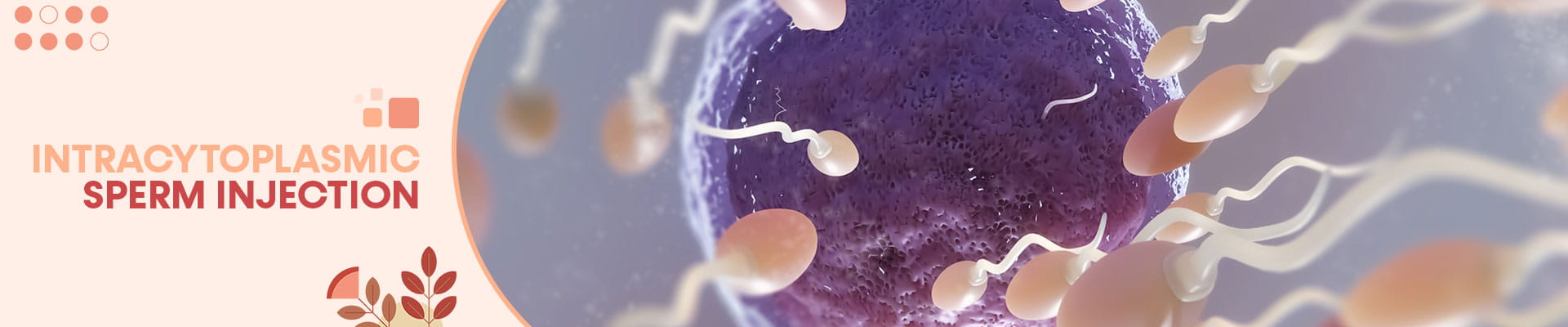

Intracytoplasmic sperm injection (ICSI) is an advanced form of IVF where a single sperm is chosen based on the best quality and then directly injected into a single egg using a microsurgical needle so that fertilisation can take place. This fertility treatment proves to be highly effective for bypassing infertility issues, primarily in males. The main purpose of ICSI is to create embryos that can help in conceiving. Therefore, the process is similar to that of IVF but in an advanced form.
However, ICSI is suggested only after proper evaluation and assessment at a trusted IVF hospital in Siliguri or any other convenient location.
Here are the main conditions when a fertility doctor suggests the use of ICSI
In this condition, the sperm are unable to move properly or move slowly, which hinders their capacity to reach the egg and penetrate. Thus, it becomes difficult for a couple to achieve pregnancy due to poor sperm movement. A top fertility doctor might suggest ICSI during this situation so that sperm can be directly injected into the egg outside the body.
This condition is also known as Oligospermia, where the number of sperm during ejaculation is too low for natural fertilisation. In addition, a low sperm count makes it difficult to fertilise an egg in the standard IVF process as well. Thus, an IVF specialist might suggest ICSI to retrieve a single sperm and inject it into the egg for fertilisation, which helps in bypassing the low sperm count issue.
If a higher percentage of sperm have abnormal shape, then it makes it difficult to penetrate the outer layer of the eggs. Thus, fertility issues can occur due to hampered penetration. ICSI might be a feasible solution in such a condition because it allows bypassing the issue of hampered penetration.
If there are repeated failures in IVF due to unexplained issues, then ICSI might be suggested so that any hidden or undetectable issues can be bypassed. According to clinical studies and research, ICSI significantly improves the rates of fertilisation for couples who have experienced IVF failures.
If a male is experiencing no sperm during ejaculation, then it might be due to blockages in the reproductive system. Thus, ICSI can be suggested by an experienced fertility doctor so that sperm can be surgically retrieved from the testicles for fertilising eggs.
Sometimes, antibodies might be present in the semen or the female reproductive tract, which attack sperm. Thus, ICSI can prove to be beneficial in such conditions because it helps in bypassing the immune response.
These are the steps that are followed for the ICSI process:

This is the first step, where the best IVF centre in Siliguri or any location of convenience is visited for consultation. As a part of the consultation, a medical evaluation is done for both partners based on comprehensive fertility tests, semen analysis, and ultrasounds.
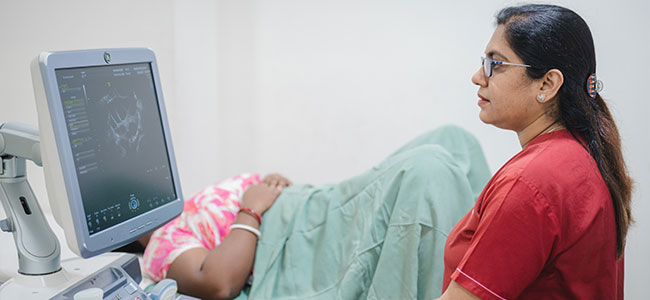
In this step, hormonal injections, such as LH or FSH, are given to the female partner so that multiple eggs can mature. In addition, a final trigger shot is given (hCG), around 30-34 hours before the process of egg retrieval.
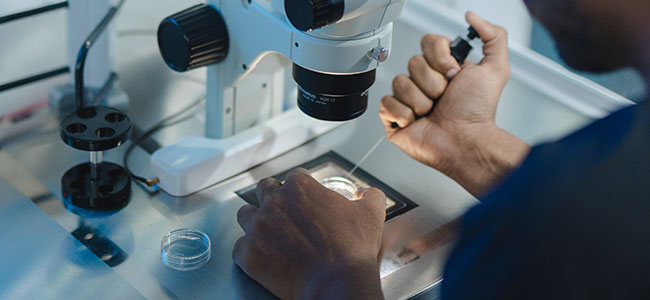
Anaesthesia is given, and a thin needle is used that is guided by ultrasound to collect eggs from the ovaries. This step is performed by experts so that the eggs do not get damaged during retrieval.

A sperm sample is collected and filtered to store the most active and healthy sperm. If there are issues with low sperm count or no sperm during ejaculation, sperm is surgically retrieved from the testicles by using a needle.

In this step, the best quality sperm is injected by using a micro-needle into the cytoplasm of each mature egg. Thus, the process of fertilisation begins after the sperm is injected into the eggs.
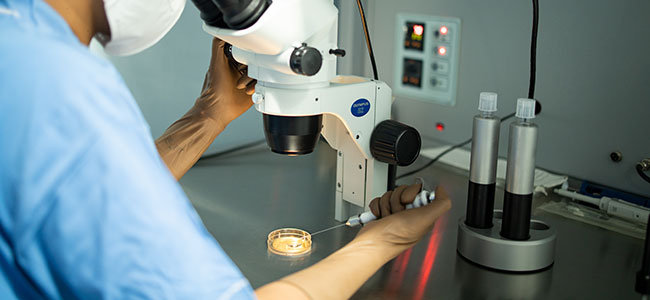
The injected eggs are monitored under a specialised clinical setting for 5-7 days, until they develop into embryos.
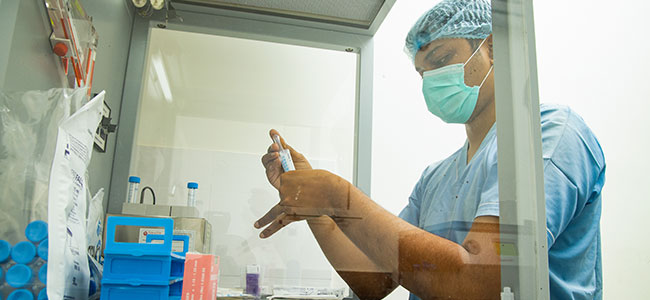
Once the embryos are developed, the best quality embryo is transferred into the uterus of the intended mother using a thin and flexible catheter.

After 10-14 days from the embryo transfer, a blood test (hCG) is done to accurately determine the results of pregnancy check.
ICSI has higher rates of fertilisation, especially for male fertility, and it plays a vital role in terms of helping couples with past IVF failures. At Newlife Fertility Center , we understand the high hopes and emotions that are associated with ICSI, especially after IVF failures. Therefore, we provide the best ICSI treatment by combining compassion, clinical expertise, and advanced technology:
We have a highly experienced team of fertility specialists, embryologists, and nursing staff, which ensures holistic care and treatment during the entire journey of ICSI.
Our laboratory and technology are world-class, which allows the delivery of accurate and reliable outcomes.
We prioritise assessing individual needs and health conditions, which in turn ensures delivery of personalised treatment plans. In addition, our treatment plans are transparent as well, based on providing a clear explanation of each step.
We provide mental health counselling before and during the ICSI journey so that couples can receive emotional support during the treatment journey.