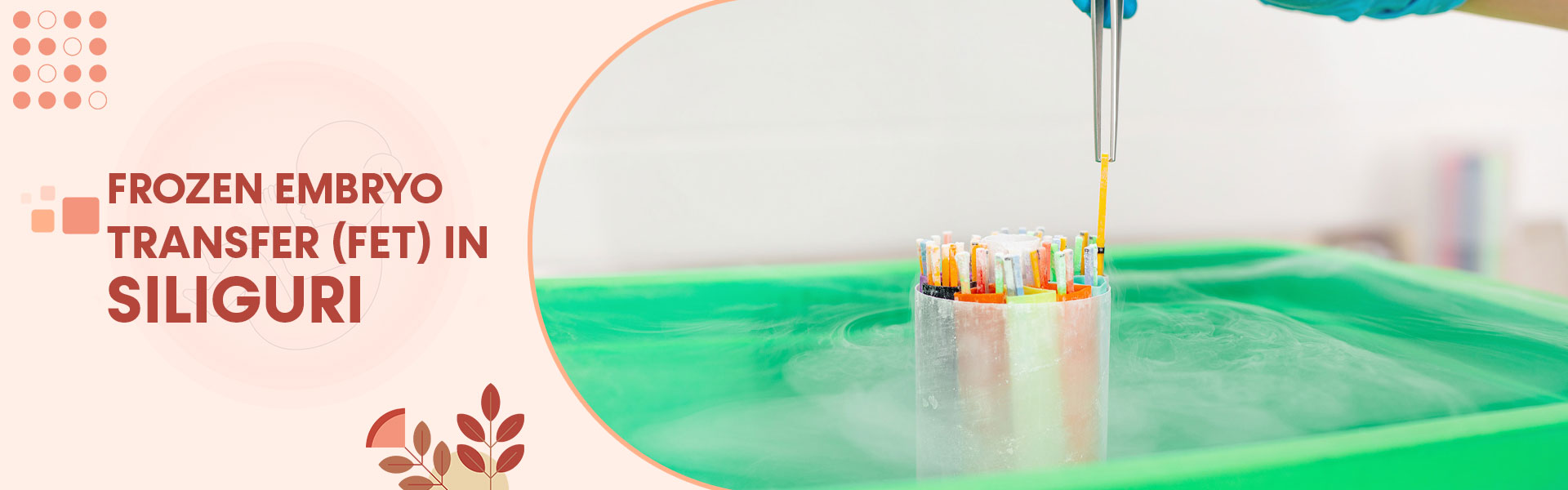
Frozen Embryo Transfer (FET) in Siliguri - A Supported Path to Parenthood
Navigating your family-building journey involves exploring supportive care pathways tailored to your unique clinical needs. At Newlife Fertility Centre, we utilize modern reproductive technologies such as Frozen Embryo Transfer (FET) to help optimize uterine receptivity and support overall care success.
FET can be an effective option if you have previously cryopreserved embryos or are planning for future preservation. It offers a structured, well-timed procedure designed to align with your body's natural rhythm.

What is Frozen Embryo Transfer (FET)?
Frozen Embryo Transfer (FET) is the process of thawing a previously cryopreserved embryo and transferring it into the uterus during an optimized phase of the menstrual cycle.
Unlike a fresh IVF cycle where transfer occurs shortly after fertilization, FET allows embryos to be preserved at sub-zero temperatures and transferred when your hormonal environment and uterine lining are ideally prepared.
When is FET Recommended for Patients in Siliguri?
Frozen Embryo Transfer (FET) is a versatile and structured option that may be recommended under various clinical circumstances:
Remaining Embryos from Prior IVF/ICSI Cycles:
If multiple healthy embryos were successfully created during your initial IVF or ICSI treatment, any remaining embryos can be safely cryopreserved for future FET cycles.
Planned Delay Due to Medical or Personal Reasons:
For individuals undergoing medical treatments - such as oncology care - or those wishing to preserve fertility for personal or professional reasons, FET provides flexible timing.
Following an Unsuccessful Fresh Transfer:
If a fresh cycle did not result in pregnancy, a cryopreserved embryo can be transferred during a hormonally prepared cycle, allowing the body time to rest.
Recovery from Ovarian Hyperstimulation Syndrome (OHSS):
To prioritize patient safety and allow the body to recover fully from stimulation medications, embryos are routinely frozen, and transfer is postponed to a subsequent cycle.
Timing Personal or Health Readiness:
FET allows you to plan your family-building timeline around your emotional well-being, physical health, and personal readiness.
Pending Genetic Screening (PGT-A/PGT-M):
Embryos are safely cryopreserved while awaiting the results of Preimplantation Genetic Testing, ensuring that only healthy, verified embryos are selected for transfer.
How Does the FET Procedure Work?
Frozen Embryo Transfer (FET) is a structured, non-invasive process carried out in clear stages:
 Cycle Preparation
Your uterine lining is prepared based on your hormonal profile through one of two primary approaches:
- Natural Cycle FET: Utilizing your body's natural ovulation and hormonal rhythm.
- Hormone Replacement Therapy (HRT) Cycle: Utilizing tailored estrogen and progesterone supplementation when cycles require supportive regulation.
Targeted hormone supplements help build and prime the endometrial lining for optimal receptivity.
 Embryo Thawing
Our embryology team carefully warms the cryopreserved embryo using advanced vitrification and warming protocols designed to maximize cell survival and structural integrity.
 Embryo Transfer
This comfortable, anesthesia-free procedure involves gently placing the embryo into the uterine cavity using a soft transfer catheter. Patients typically rest briefly before returning home the same day.
 Pregnancy Testing
A beta hCG blood test is scheduled approximately 10 to 14 days following the transfer to confirm whether successful implantation has occurred.
Comparing Fresh and Frozen Embryo Transfers
Evaluating fresh versus frozen transfers involves considering endometrial receptivity, hormone levels, and cycle timing. Reviewing these differences helps clarify why FET is frequently utilized in modern reproductive care:
| Feature | Fresh Transfer | Frozen Transfer (FET) |
|---|---|---|
| Timing | Same IVF stimulation cycle | Delayed, allowing flexible scheduling |
| Hormone Load | Higher due to recent stimulation medications | Lower or managed via natural/HRT cycle |
| Endometrial Receptivity | Can occasionally be influenced by high hormone levels | Optimized for natural physiological synchronisation |
| Success Rates | Varies by clinical profile | Often comparable or higher in targeted cases |
| Risk of OHSS | Present during stimulation | Significantly minimized |
| Cost Structure | Includes retrieval and stimulation expenses | Focused primarily on preparation and transfer |
Allowing the uterus time to recover from stimulation medications before an FET cycle helps create a balanced, receptive environment for embryo implantation.
Understanding FET Success Rates
Success rates for FET cycles depend on a variety of individual health and clinical factors. Key determinants include:
- Patient age at the time of embryo cryopreservation
- Endometrial thickness and precise transfer timing
- Endocrine balance and the individual implantation window
- Laboratory standards and embryology expertise
- Embryo developmental stage (such as blastocyst culture quality)
Precise timing and clinical assessment - supported by ultrasound monitoring and advanced evaluations like the Endometrial Receptivity Array (ERA) when appropriate - help support optimal outcomes.
Why Choose FET at Newlife Fertility Centre in Siliguri?
Our clinical and embryology teams provide dedicated guidance and advanced facilities for Frozen Embryo Transfer cycles:

Advanced Vitrification Laboratory:
We utilize sophisticated vitrification techniques to safely cryopreserve and warm embryos, preserving their developmental viability.

Experienced Clinical & Embryology Team:
Our specialists bring extensive experience in meticulous embryo handling and personalized cycle management.
Comprehensive Diagnostic Compatibility:
We offer specialized testing options such as ERA, genetic screening, and blastocyst culture protocols when clinically indicated.
Supportive, Patient-Centered Environment:
From initial consultation to transfer day, our team fosters a reassuring atmosphere designed to reduce stress.

Counseling and Emotional Support:
Our counselors provide empathetic guidance to help you navigate every emotional aspect of your fertility journey.
Every FET protocol at Newlife Fertility Centre is fully customized to your medical history, cycle characteristics, and family-building objectives.
Our team ensures your treatment plan is tailored thoughtfully to support your unique path to parenthood.
Understanding the Cost of FET
Treatment pricing varies depending on whether specific cycle steps are bundled into initial care packages or managed separately.
While costs across India generally fall within accessible ranges, exact pricing depends on individual clinical requirements. FET is often more cost-efficient than a fresh cycle because:
- It avoids surgical egg retrieval procedures
- It utilizes previously cryopreserved embryos
- It eliminates the need for ovarian stimulation medications
At Newlife Fertility Centre branches in Coochbehar and Malda, we maintain transparent communication regarding consultations, medications, warming procedures, and transfer fees.
Please reach out to our team for a personalized cost estimate tailored to your care plan.
Ready to Explore Frozen Embryo Transfer?
Frozen Embryo Transfer (FET) is a well-established, evidence-based option whether you are planning your first transfer or exploring subsequent steps after a prior cycle.
Our compassionate care team is here to provide expert guidance and support throughout your treatment.
Frequently Asked Questions
Is FET as successful as fresh IVF?
Yes. When properly timed and tailored to the patient's hormonal profile, FET cycles frequently demonstrate high implantation and clinical pregnancy rates.
How long can embryos remain safely frozen before an FET?
Cryopreserved embryos can be stored safely for extended periods - often many years - depending on individual health status and regulatory guidelines.
Is the FET transfer procedure painful?
No. The transfer procedure is quick, straightforward, and generally painless, requiring no anesthesia.
How many embryos are typically transferred during FET?
Typically, one or two embryos are selected for transfer based on patient age, embryo grading, and specific clinical history.
Can I resume normal activities after an embryo transfer?
Yes. Light daily movement is encouraged, though patients are advised to maintain restful activity and avoid strenuous exertion or undue stress during the immediate post-transfer days.