IUI, IVF, and ICSI are three different Assisted Reproductive Technologies that differ in how and where fertilization happens. In IUI, concentrated, washed sperm are injected directly into the uterus of the woman. In IVF, hormones stimulate the ovaries to produce multiple eggs, which are extracted surgically. The eggs and sperm are mixed in a lab for fertilization to happen naturally outside the body. The resulting embryos are transferred directly into the uterus. In ICSI, a single good-quality sperm is injected directly into the centre of a mature egg.
Infertility can be caused by a variety of reasons, such as age-related changes, reduced ovarian reserve, hormonal disorders, ovulation problems, polycystic ovary syndrome (PCOS), low sperm count, abnormal sperm morphology, or many other reasons. Some causes of infertility are explained in detail -
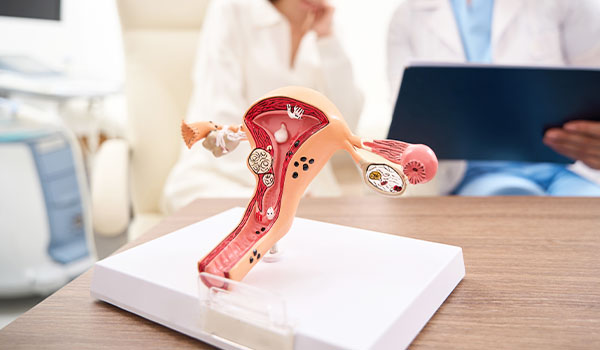
They can prevent the sperm from reaching the egg. It can also interfere with periodic ovulation.

Irregular or no ovulation can make it difficult for the egg to be released from the ovary.

It is a condition in which a tissue similar to the lining of the uterus grows outside of it; this can affect reproductive function.
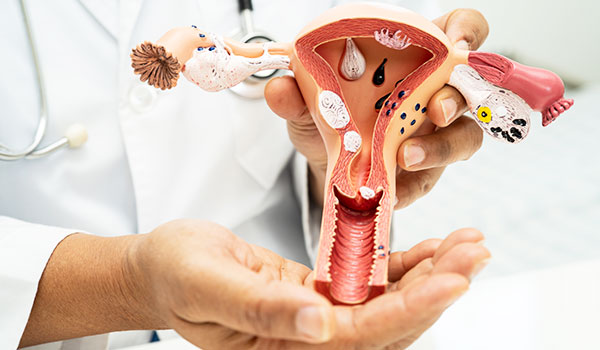
PCOS causes anovulation, that is, the failure of the ovaries to release an egg. This happens because a chain reaction of high insulin and extra male hormones stops egg sacs from fully maturing.
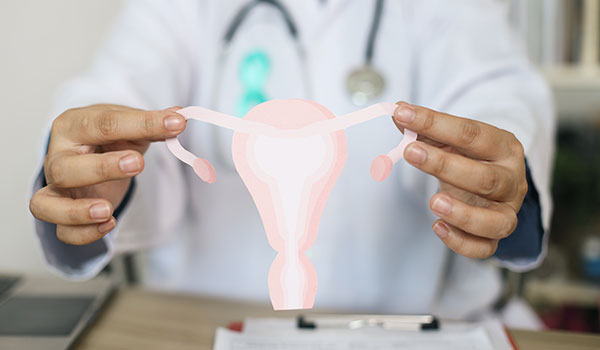
Fibroids, polyps, adhesions, or some other structural abnormalities can affect conception or implantation.
A lower number of sperm means fewer candidates can make the long journey through the reproductive tract to reach the egg.
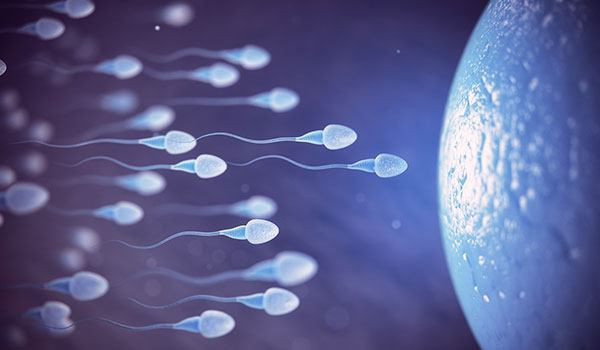
It causes infertility because the sperm cannot swim efficiently through the female reproductive tract to reach and fertilize an egg.

Due to this, the sperm is unable to swim correctly and break through the egg's outer layer.

They prevent the sperm from reaching the egg or reduce the ability of the sperm to fertilize an egg.

They disrupt delicate chemical signals which are needed to produce healthy sperm.
According to the Mayo Clinic, Intrauterine insemination is a procedure in which sperm is inserted directly into the uterus, the organ where the baby develops. The sperm is specially prepared and is placed around the time an ovary releases one or more eggs. This method is also called artificial insemination. The aim is to unite the sperm and eggs in the fallopian tube, which connects the uterus to the ovaries. If this happens, it can result in a successful pregnancy.
The development of follicles is monitored by the fertility specialist through ultrasound and/or hormone tests. Sometimes, medications may also be used to assist ovulation.
IUI is meticulously planned around ovulation. An ovulation-triggering medicine may also be prescribed in some treatment cycles.
The sperm is collected on the day of the IUI procedure.
The collected semen is processed in the laboratory to separate and concentrate healthier and more motile sperm.
The prepared sperm is placed in the uterus through a thin catheter.
The catheter is removed, and the patient is free to return to normal activities. The pregnancy test is done after the waiting period prescribed by the fertility specialist.
MedlinePlus defines In Vitro Fertilization as the joining of a man's sperm and a woman's eggs in a petri dish in a laboratory. Since this process takes place outside the body, it is called in vitro fertilization.
Normally, an egg and sperm are fertilized inside the body. If this fertilized egg gets attached to the lining of the uterus and starts developing, a baby is born in around 9 months. This process is called natural or unassisted conception. On the other hand, IVF is a type of assisted reproductive technology; that is, special medical techniques are used to achieve a successful pregnancy.
Medications are administered to stimulate the ovaries to produce multiple mature eggs instead of a single egg. Ultrasound scans and/or blood tests are performed to monitor follicle growth and hormone levels. The doctor may modify the medicines based on the information obtained.
Once eggs are mature, a trigger medicine is administered to complete the final stage of maturation. Following this, egg retrieval is scheduled around 34 to 36 hours later.
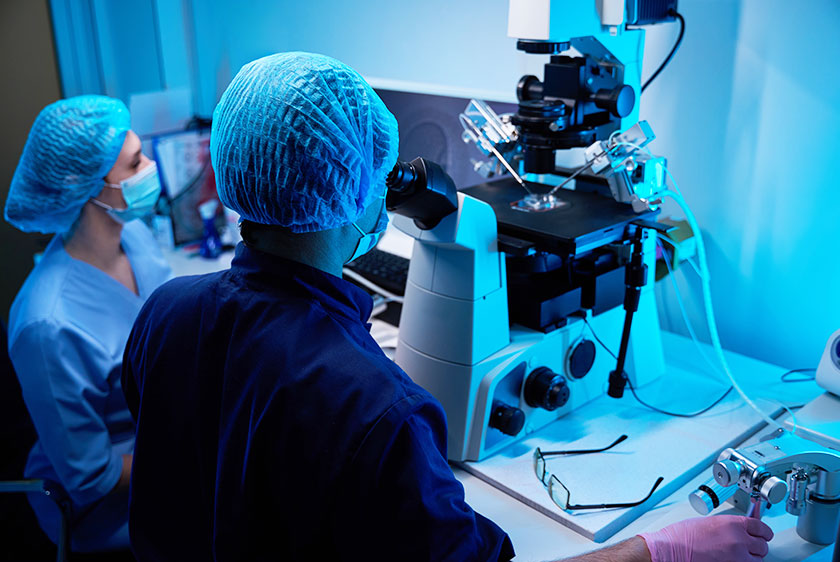
Mature eggs are collected from the ovaries with a thin needle assisted by an ultrasound. This process is performed under appropriate anaesthesia. Similarly, a semen sample is collected and analysed in the laboratory to identify sperms which are healthier and have high motility.
The eggs and sperm are fertilized in a laboratory. The eggs that are fertilized develop into embryos.
A suitable embryo is placed in the uterus using a thin catheter. After this process, the fertility specialist instructs when to conduct a pregnancy test. The timing depends on the treatment given.
According to Cleveland Clinic, it injects live sperm into a woman's eggs, in particular the cytoplasm, which is the gel-like substance in the centre of the egg consisting of salt, water, and other molecules. It is a type of IVF. This procedure is used when male infertility prevents a successful pregnancy.
This is achieved by administering fertility medicines. The ovaries produce multiple eggs. Ultrasound and/or blood tests are performed to monitor the response.
The eggs are retrieved using a thin needle only after they reach the required maturation. This requires appropriate sedation or anesthesia. A semen sample is collected and processed in the laboratory.
An embryologist selects high-quality sperm based on factors like movement and appearance. This sperm is then injected directly into the mature egg with the help of an injection pipette.
The fertilized egg develops into an embryo in the following days. Based on the treatment plan, embryos may also be frozen and used for impregnation later. Following this, a pregnancy test is performed as instructed by the fertility specialist.
| Feature | IUI (Intrauterine Insemination) | IVF (In-Vitro Fertilization) | ICSI (Intracytoplasmic Sperm Injection) |
|---|---|---|---|
| Where fertilization occurs | Inside the body | In a laboratory | In a laboratory |
| How sperm reaches the egg | Sperm placed directly into the uterus | Sperm and eggs are combined in the laboratory | One sperm is injected directly into an egg. |
| Ovarian stimulation | May or may not be used | Usually used | Usually used |
| Laboratory Involvement | Limited | Extensive | Highly specialized |
| Procedure Complexity | Relatively simple | More complex | More technically advanced |
| When is it considered? |
|
|
|
| Treatment duration | It generally takes about 4 weeks from beginning to end | It usually takes 4-6 weeks | It takes approximately 4 to 6 weeks |
| Cost (indicative, depends on the hospital, treatment, facilities, etc.) | ₹7,000 - ₹30,000 | ₹1,00,000 - ₹2,00,000 | ₹1,20,000 - ₹3,00,000 |
| Invasiveness | Minimally invasive | Moderate to highly invasive | Moderate to highly invasive |
| Pregnancy Guarantee | No | No | No |
| Aim | Bring sperm closer to the egg | Create and transfer suitable embryos | Assist fertilization by directly injecting sperm into the egg |
The difference between IUI and IVF is where the fertilization takes place and how much of the reproductive process is assisted. Some additional differences also exist, which are given below -
The difference between IVF and ICSI is based on factors like the fertilization process, sperm requirements, and when they are opted for. These factors are described below in detail -